Permeable Pavement in Cleveland and Northeast Ohio: Why Maintenance Matters More Here
Northeast Ohio's climate creates uniquely challenging conditions for permeable pavement. Cleveland receives an average of 39 inches of precipitation per year, plus significant snowfall that is treated with road salt and sand throughout the winter months. When spring arrives, snowmelt carries this accumulated sand, salt residue, and winter road grime directly onto permeable surfaces. Combined with leaf debris from the region's extensive deciduous tree canopy and construction sediment from Northeast Ohio's ongoing development projects, permeable pavement in this region clogs significantly faster than in warmer, drier climates.
When permeable pavement loses its infiltration capacity, it stops functioning as a stormwater BMP. Rainwater that should infiltrate through the surface instead runs off — exactly the problem the pavement was designed to prevent. For Ohio property owners, this creates both a compliance problem (the BMP is no longer performing as credited) and an infrastructure problem (runoff may overwhelm downstream systems, cause flooding, or discharge pollutants into local waterways like the Cuyahoga River, Lake Erie tributaries, and other Northeast Ohio streams).
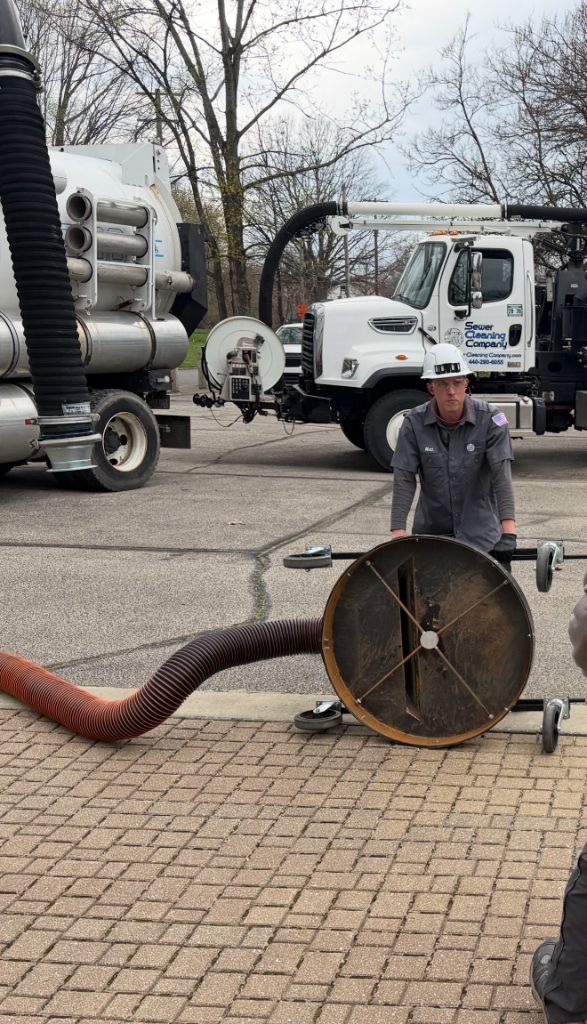
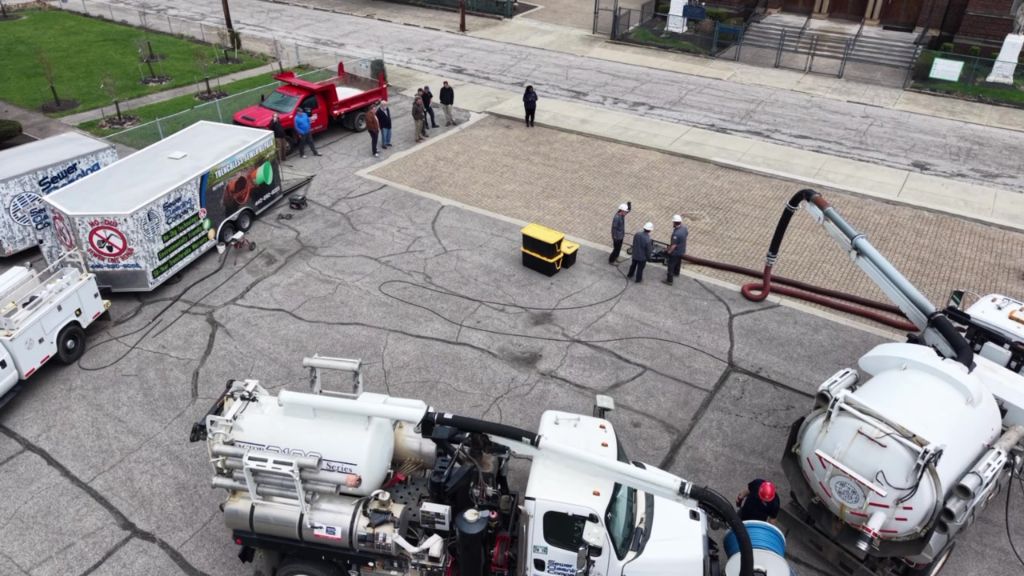
EnviroFlow USA is based in Eastlake, Ohio, providing permeable pavement maintenance across Cuyahoga, Lake, Geauga, Summit, Lorain, Medina, and Portage counties. We bring purpose-built vacuum cleaning equipment designed specifically for permeable surface restoration — not repurposed street sweepers or standard pressure washing that can damage pavement or compact sediment deeper into voids.
Ohio compliance note: Under Ohio's post-construction stormwater management rules, permeable pavement installations must maintain documented long-term maintenance plans. If your permeable pavement was installed as part of a stormwater management plan approved by your local Ohio community, you are likely required to maintain and document maintenance of that surface. EnviroFlow USA provides all necessary documentation for Ohio EPA compliance.
Types of Permeable Pavement We Service Across Ohio
Permeable Interlocking Concrete Pavers (PICP)
PICP systems are the most common permeable pavement type in Northeast Ohio commercial and municipal projects. These modular systems use concrete pavers with widened joints filled with permeable aggregate. Water infiltrates through the joints into an aggregate base that provides storage and gradual release. PICP maintenance requires careful joint cleaning without displacing aggregate — a process our precision vacuum head systems handle perfectly. Cleveland-area installations at shopping centers, office parks, and municipal parking lots rely on EnviroFlow for annual PICP maintenance.
Pervious Concrete
Pervious concrete uses a specially formulated mix that creates a network of interconnected voids throughout the slab. Common in Ohio municipal sidewalks, parking areas, and low-traffic applications, pervious concrete requires vacuum cleaning to remove sediment that embeds in the surface voids. Our high-pressure wash-and-vacuum process is optimized for pervious concrete's open pore structure.
Porous Asphalt
Porous asphalt looks like conventional asphalt but is manufactured with reduced fine aggregate to create void spaces for water infiltration. Used in parking lots and low-speed roadways across Northeast Ohio, porous asphalt requires regular vacuum cleaning to prevent surface sealing from fine sediment. Ohio's freeze-thaw cycle is especially challenging for porous asphalt, as ice expansion can push sediment deeper into voids.
Grid Pavement Systems
Plastic or concrete grid systems filled with grass or aggregate provide permeable surfaces for overflow parking areas, fire lanes, and access roads. These systems are increasingly popular in Ohio green infrastructure projects. Maintenance involves sediment removal from grid cells, vegetation management, and ensuring the aggregate or turf fill is performing properly.
Ohio Regulatory Requirements for Permeable Pavement Maintenance
Permeable pavement installations in Ohio are regulated at multiple levels, and property owners who neglect maintenance risk losing stormwater credits, facing code enforcement, and potentially triggering EPA violations:
Ohio EPA Post-Construction Requirements
Ohio's NPDES General Permit for Construction Activity and MS4 permits require that post-construction stormwater BMPs — including permeable pavement — be maintained in perpetuity. This means the maintenance obligation doesn't expire when a building is completed or sold. Long-term maintenance agreements are typically required as conditions of site plan approval, and Ohio communities can enforce these requirements through code enforcement and, in some cases, liens on the property.
MS4 Permit Compliance in Northeast Ohio
Municipalities operating under Ohio's MS4 general permit are required to track and ensure maintenance of post-construction BMPs within their jurisdictions. This means your local community in Cleveland, Akron, or elsewhere in Northeast Ohio may request documentation proving that your permeable pavement is being properly maintained. EnviroFlow USA's maintenance reports — including pre- and post-cleaning infiltration test results — provide exactly the documentation needed to satisfy these requests.
Stormwater Credit Requirements
If your Ohio property uses permeable pavement to earn stormwater management credits for development approval, the credits are contingent on the pavement functioning as designed. If an inspection reveals that the surface has lost significant infiltration capacity due to neglect, the credits may be revoked — potentially requiring installation of alternative BMPs at significant expense. Regular maintenance is far less costly than remediation.
Common Causes of Permeable Pavement Failure in Northeast Ohio
Understanding what clogs permeable pavement in this region helps property owners and managers take preventive steps:
- Winter sand and salt tracking — The single largest source of clogging material in Northeast Ohio. Vehicles track road sand and salt from adjacent streets onto permeable surfaces throughout the winter months. Properties in Cleveland, Akron, and other communities with aggressive winter road treatment programs are especially affected.
- Construction sediment — Soil, dust, and fine sediment from nearby construction projects wash onto permeable surfaces during rain events. Northeast Ohio's active development and redevelopment activity makes this a persistent problem.
- Leaf and organic debris — The region's extensive deciduous tree canopy drops massive volumes of leaves each fall. Decomposing leaves form a sediment layer that infiltrates pavement voids and dramatically reduces infiltration rates.
- Landscaping soil runoff — Poorly graded landscaping adjacent to permeable surfaces allows soil to migrate onto the pavement during rain events. This is a design and grading issue, but maintenance can mitigate its effects.
- Improper winter maintenance — Using sand-based deicers on or adjacent to permeable pavement introduces clogging material directly into the surface. Ohio properties with permeable pavement should use salt-only deicing strategies.
- Sealcoat and asphalt contamination — If adjacent conventional asphalt surfaces are sealcoated, overspray or runoff can seal the surface of porous asphalt, destroying infiltration capacity permanently.
Maintenance Scheduling for Ohio Properties
The optimal maintenance schedule depends on your site conditions, traffic levels, and proximity to sediment sources. Here is what we recommend for Northeast Ohio properties:
- High-traffic commercial lots (shopping centers, restaurants, big box retail) — Quarterly vacuum cleaning, with additional service after major construction activity nearby
- Standard commercial properties (office parks, medical facilities, apartment complexes) — Semi-annual cleaning: once in spring (after winter sand/salt season) and once in late fall (after leaf drop)
- Municipal installations (sidewalks, parking areas, green infrastructure) — Annual minimum per Ohio MS4 requirements, with priority cleaning for high-use areas
- Low-traffic and residential applications — Annual cleaning, typically in spring, is sufficient for most residential permeable pavement installations
- New installations — Monthly monitoring during the first year, especially during and after adjacent construction activity. First cleaning typically needed 6-12 months after installation.
Why Choose EnviroFlow USA for Permeable Pavement Maintenance in Ohio
- Purpose-built equipment — Precision vacuum head systems and industrial vacuum trucks specifically designed for permeable surface cleaning, not repurposed street sweepers
- ASTM C1701 infiltration testing — Pre- and post-cleaning infiltration rate testing to document performance restoration and provide compliance records
- Ohio EPA compliance expertise — We understand Ohio's post-construction BMP maintenance requirements across every community we serve
- All surface types — Experience with PICP, pervious concrete, porous asphalt, and grid systems across Cleveland and Northeast Ohio
- Based in Eastlake, Ohio — Local to Northeast Ohio with rapid response capability across all seven counties
- Full stormwater partner — Beyond permeable pavement, we provide catch basin cleaning, storm drain cleaning, hydro jetting, and complete MS4 compliance assistance